

News
How to Choose a Safety Lancet Manufacturer: 12-Point Checklist
Short answer: Vet a safety lancet manufacturer on twelve points — ISO 13485:2016 certification, registration coverage by market, cleanroom class and sterilisation validation, ISO 10993 biocompatibility data, in-house testing capability, injection-moulding and needle geometry control, production capacity, AQL records, lot traceability to the sterilisation batch, OEM flexibility, labelling readiness, and post-market surveillance. Ask for documents, not brochures.
Why safety lancet sourcing goes wrong more often than buyers expect
The failures are almost never about the needle. Modern lancet tooling is mature, and a 28G or 30G tri-bevel needle is not a difficult component to grind. What breaks is the paperwork, the process control behind the paperwork, and the assumptions buyers make when a supplier is fluent in commercial language but vague in regulatory language.
These are the five failure modes we see most often when a distributor comes to us after a problem:
- Registration mistaken for clearance. “We are FDA registered” is true for thousands of facilities that have never cleared a device. Registration and listing under 21 CFR 807 is a facility obligation. Clearance is a device decision.
- A certificate that is technically real but out of scope. The QMS certificate covers a different site, or a different device family, or expired last quarter. Nobody checked the annex.
- Depth quoted as a single number. A specification that says “1.8 mm” with no tolerance tells you nothing about repeat-stick rates. Depth tolerance is the number that shows up in complaints.
- No lot-level sterilisation evidence. The supplier can show a validation report from three years ago but cannot produce the routine sterilisation certificate for the specific lot you received.
- A silent change of needle vendor. Component substitution is the single most common unannounced change in this category. It usually does not change the appearance of the product at all.
Here is the test we recommend before you spend time on anything else. Pick a lot number from stock you already have, and ask the supplier to return the full chain — raw material batch, moulding batch, assembly date, sterilisation batch, release record — within 24 hours. Regulators call this a recall simulation. Suppliers who can do it have a functioning quality system. Suppliers who cannot will send you a certificate of analysis and hope you stop asking.
What makes a safety lancet a Class II medical device
You cannot evaluate a manufacturer without knowing what the product is in regulatory terms. This is the part of the conversation where generic trading companies get exposed quickly.
21 CFR 878.4850, product code FMK, and what “special controls” actually means
In 2016 the FDA reclassified blood lancets and created a dedicated regulation, 21 CFR 878.4850. It splits the category in two: single-use lancets with an integral sharps injury prevention feature, and single-use lancets without one. Both are Class II devices subject to special controls. The variant with an integral sharps injury prevention feature carries product code FMK.
The special controls are specific, and they are worth knowing because they define what a credible manufacturer must be able to prove:
- Mechanical performance testing showing the device withstands the forces encountered in use, and that the safety feature irreversibly disables the device after one use.
- Demonstrated biocompatibility of patient-contacting materials.
- Sterility testing of every component that breaches the skin — the needle or blade.
- Labelling with illustrated use instructions, hand-hygiene and skin-preparation steps, safe disposal instructions, and the prominent statements “For use only on a single patient. Discard the entire device after use.”
Practically: ask for the 510(k) number and the publicly available summary, then check that the cleared configuration is the one you are buying. A clearance for a 28G fixed-depth needle does not automatically cover a 23G adjustable version, and a supplier who does not flag that distinction is either inexperienced or hoping you are.
FDA establishment registration is not FDA clearance
Any facility that manufactures, repackages or distributes a device for the US market must register with the FDA and list its devices. That obligation has existed for decades and costs a few thousand dollars a year. It is a starting point, not an endorsement.
One thing did change recently, and it works in favour of buyers who know about it. Since 2 February 2026, the FDA’s Quality Management System Regulation has aligned 21 CFR 820 with ISO 13485. In practice this means an ISO 13485:2016 certificate now carries more evidentiary weight with the FDA than it did under the old Quality System Regulation — provided the certificate is genuine and its scope covers the site and the device.
What CE marking under EU MDR 2017/745 requires
Under the Medical Device Regulation, a sterile, invasive, single-use device such as a safety lancet cannot be self-declared. A notified body must audit the manufacturer’s quality management system and review the technical documentation, including the clinical evaluation. The manufacturer also needs a UDI, registration in EUDAMED, a post-market surveillance plan and, depending on classification, periodic safety update reports.
Two checks are worth more than any brochure. First, the notified body number on the certificate — look it up in the Commission’s NANDO database and confirm the body is still designated for the relevant scope. Second, the certificate annex — confirm it names the device family and the manufacturing site you are actually auditing. Notified body certificates get suspended, and a distributor holding stock against a suspended certificate is in a difficult position.
UKCA and the UK market
The UK operates a separate regime, and its rules on accepting CE-marked devices have been adjusted more than once. Rather than rely on a supplier’s summary of the current position, ask for the document that applies to the market you are selling into and verify it against the MHRA register. If your supplier cannot tell you which approved body issued the certificate, that is your answer.
The 12-point safety lancet manufacturer checklist
The list below is ordered roughly by how often each item turns out to be the actual problem. Work through it before you send an RFQ, not after samples arrive. A safety lancet manufacturer that fails the first five points will not recover at points six to twelve, however good the price looks.
1. Quality management system: ISO 13485:2016, not just ISO 9001
ISO 9001 is a general quality standard. ISO 13485 adds medical-device-specific requirements: design controls, risk management to ISO 14971, documented traceability, sterilisation process control, and regulatory reporting obligations. A lancet factory holding only ISO 9001 is telling you something about its customer base.
Ask for the certificate itself, not a scan of the logo. Check the certificate number, the issuing notified body, the expiry date, and — this is the step people skip — the scope statement. It should cover the manufacture of sterile single-use medical devices at the specific address you plan to work with.
2. Registration coverage by market
Coverage is not a yes/no question. Ask which markets are covered, and ask for the document for each one.
| Market | Document to request | What it does and does not mean |
|---|---|---|
| United States | FDA 510(k) clearance number + public summary | Device-level clearance for that configuration. The strongest single document you can ask for. |
| United States | Establishment registration + device listing | Facility registration only. Not a clearance, not an approval. |
| European Union | MDR 2017/745 certificate with notified body number | Notified-body-audited QMS and technical file. Verify in NANDO and check the annex. |
| United Kingdom | UKCA certificate from a UK Approved Body, or a recognised CE certificate | Market-specific. Confirm the current MHRA position for your device type. |
| China | NMPA registration and GMP certificate | Evidence of a regulated domestic manufacturing environment. |
| Korea | MFDS / KFDA licence | Additional independent audit evidence, useful as a cross-check. |
3. Cleanroom classification and sterilisation validation
Lancets are moulded, assembled, inspected and packed in a controlled environment. The classification numbers matter because they determine bioburden before sterilisation. A Class 100,000 (ISO 8) area is the common baseline for assembly and packaging; a Class 10,000 (ISO 7) area is typical for more critical operations. Ask for the ISO 14644-1 classification report and, better still, recent particle-count records. A cleanroom claim without monitoring data is a room with a filter in it.
On sterilisation, ask two questions. Which standard — ISO 11137 for radiation, ISO 11135 for ethylene oxide? And what is the routine release evidence per lot? Gamma sterilisation at a validated dose is the simpler answer for polypropylene-bodied lancets: no residue questions, no aeration cycle, and a clean regulatory story in markets that are increasingly cautious about ethylene oxide residues.
4. Biocompatibility testing to ISO 10993
The needle or blade breaches skin, so biocompatibility evidence is not optional. Expect at least ISO 10993-1 evaluation, ISO 10993-5 cytotoxicity, and ISO 10993-10 irritation and sensitisation testing. Ask for the test reports and the laboratory name.
Then ask one follow-up question that separates careful manufacturers from the rest: was the tested sample taken from the final, sterilised configuration? Testing a non-sterile prototype and extrapolating to the finished product is a common shortcut, and it is the kind of shortcut that surfaces during a notified body audit of your own file.
5. In-house laboratories versus third-party-only testing
There is a real difference between a factory that runs physical, chemical and biological testing on site and one that ships samples out once a year. In-house capability means penetration depth, activation force, blade width and length, corrosion resistance and seal integrity can be checked in-process, on every batch, rather than at the end of the line.
Ask how the testing is distributed: how many checks happen in-process, how many at end-of-line, and which are outsourced. If everything is outsourced, your defect discovery is happening at final inspection — which is too late to prevent the defect, and much too late to prevent the repeat stick.
6. Injection moulding and needle geometry control
This is where you find out whether you are talking to a manufacturer or an assembler. Useful questions:
- How many cavities per mould, and how is cavity-to-cavity variation controlled?
- Is the needle ground from wire in-house or purchased as a finished component?
- What is the tri-bevel geometry, and is the tip electro-polished and silicone-coated?
- What is the published penetration depth tolerance across the range?
- What is the acceptance limit on penetration force?
A published depth tolerance of ±0.4 mm across a standard 1.5–2.4 mm range is a reasonable benchmark — shallow enough to be honest, tight enough to matter. If a supplier quotes a depth with no tolerance at all, you have found the limit of their process control, not the limit of their catalogue.
7. Production capacity and lead-time reliability
A capacity number without a delivery record is marketing. Ask for three things: monthly output by product family, the number of production lines, and on-time delivery performance for the last six months. Then ask the operational questions that actually break supply chains: what happens to lead time around Chinese New Year, what is the standard production window for a repeat order, and what is the window for a first-time private-label run that needs new artwork approval.
8. AQL performance and defect-rate transparency
Ask which sampling standard is used. The relevant one is ISO 2859-1. Then ask for the AQL level, the sample size per lot, and a copy of the last six months of internal inspection records. On consumables of this type, a well-controlled line should be able to show critical defects at zero and major defects comfortably under 0.65%. “We inspect 100%” is not an answer — it is a statement that the process is not trusted, and it is also physically implausible at the volumes involved.
9. Lot traceability to the sterilisation batch
Every box should carry a lot code that resolves to a complete chain: raw material batch, moulding batch, assembly date, sterilisation batch and release. This is the point where a real quality management system becomes visible, because traceability is expensive to implement and easy to fake until someone asks for the full chain.
Run the 24-hour test described earlier. It is the single most informative request you can make, and it costs you nothing.
10. OEM and private label flexibility
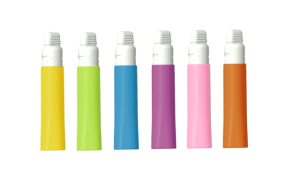
If you intend to sell under your own brand, the questions shift from “what do you make” to “what can you change, and at what cost”. The list of variables is longer than most buyers expect: housing colour and colour-coding architecture, gauge and depth combinations, cap design, label artwork and material, IFU language and format, box counts (100/box, 200/box, dispenser packs), shelf-pack configuration, and carton marking.
Two commercial questions decide most projects. Who owns the tooling if new tooling is required? And what is the minimum order quantity per configuration — because a “low MOQ” that applies to a single standard SKU is not useful if you need four depth variants.
11. Packaging, labelling and IFU readiness by market
Sterile barrier systems should be validated to ISO 11607 and compatible with the sterilisation method in use. On labelling, the EU and US requirements diverge in ways that affect your artwork timeline:
- EU: MDR Annex I labelling with the CE mark, manufacturer and authorised representative details, UDI carrier, and an IFU in the required languages for the member states where you sell.
- US: the special-control statements required by 21 CFR 878.4850, plus labelling appropriate for the intended use environment — healthcare or home use, written accordingly.
Language coverage is a genuine cost and lead-time item. The EU has up to 24 official languages, and each one you add means new artwork, new proofing and new plate or plate-less print setup.
12. Post-market surveillance and complaint handling
A device on the market generates complaints. What matters is the system behind them. Under the MDR the manufacturer needs a post-market surveillance plan and, for higher classes, periodic safety update reports, plus vigilance reporting within defined timeframes. In the US, Medical Device Reporting obligations apply, with 30-day and 5-day reporting windows depending on severity.
Ask for their complaint handling procedure, their average complaint closure time, and a direct answer to whether they have had any recalls or field safety corrective actions. Then verify it yourself — the FDA maintains a public recall database, and checking a prospective supplier there takes about three minutes.
Red flags that signal a weak safety lancet supplier
None of the following is conclusive on its own. Two or three together, however, should end the evaluation. Every safety lancet manufacturer will claim a functioning quality system on the first call; these are the signals that suggest the claim will not survive scrutiny.
| What you see | What it usually means |
|---|---|
| “FDA approved” in the first email | The sender does not distinguish registration from clearance. Expect the same imprecision everywhere else. |
| A CE or ISO certificate with no notified body number | Either a different scheme than claimed, or a document that will not survive your own audit. |
| Cannot name the sterilisation standard | Sterilisation is outsourced and uncontrolled at the documentation level. |
| Depth quoted without a tolerance | The number is a nominal target, not a controlled specification. |
| No AQL records, only “100% inspection” | No statistical process control. Defects are found, not prevented. |
| Samples never come from production stock | Golden samples are being selected. What you approve will not be what you receive. |
| Lead time changes every time you ask | Capacity is being resold to whoever asks last. |
| Certificate scope lists a different address | You are buying from a trading company, and the audit trail ends at their office. |
| No lot code printed on the box | Traceability does not exist below carton level. |
How to read a safety lancet specification sheet
Most comparison errors come from comparing product names instead of REF codes. A name is marketing; the REF is the controlled unit. Here is the minimum field set for a defensible comparison — and the reason each field matters.
| Field | Example | Why it matters |
|---|---|---|
| REF / product code | PA-04-2618 | The only reliable basis for comparison and reordering. Names change; REFs do not. |
| Needle gauge | 26G | Drives blood volume and perceived comfort. |
| Penetration depth | 1.8 mm | The depth delivered under labelled operation — never infer it from needle length. |
| Depth tolerance | ±0.4 mm | Predicts repeat-stick rate more accurately than the nominal depth. |
| Activation method | Pressure-activated | Determines training load and misfire profile, especially with gloves. |
| Post-use state | Permanent retraction, single-use lockout | This is the actual safety claim. Activation method alone proves nothing. |
| Sterilisation | Gamma (Co-60), ISO 11137 | Affects material compatibility, shelf life and market acceptance. |
| Shelf life | 5 years from sterilisation | Inventory planning and tender compliance. |
| Pack format | 100 pcs/box | Per-test cost, storage footprint and dispensing workflow. |
| HS code | 9018.39 | Duty calculation. Verify with your broker rather than accepting it from a supplier. |
| Regulatory identity | Class II, product code FMK | Confirms which documents should exist. |
One more warning. If a specification sheet cites ISO 7886-1 as the product standard, stop reading. That standard covers sterile hypodermic syringes, not lancets. Copy-pasted standards are a reliable indicator of copy-pasted technical files.
Questions to put in your RFQ
Send these as written questions and ask for written answers. The quality of the reply tells you as much as the content. A safety lancet manufacturer that answers all thirteen in writing, with the documents attached, has already separated itself from most of the field.
- ISO 13485:2016 certificate — number, issuing body, expiry, and the scope statement for the manufacturing site.
- FDA 510(k) number and public summary for the exact configuration quoted.
- MDR certificate with notified body number and the device families listed in the annex.
- ISO 14644-1 cleanroom classification report and recent particle monitoring records.
- Sterilisation method, standard, validated dose, and a sample routine release certificate for a named lot.
- ISO 10993 test reports — and confirmation the sample was the final sterilised configuration.
- Published penetration depth and depth tolerance per gauge.
- AQL standard, level and sample size; last six months of internal inspection records.
- Demonstration of lot traceability from a supplied lot number within 24 hours.
- Monthly output by product family and on-time delivery performance for the last six months.
- MOQ and lead time per configuration, including first-article and artwork approval lead time.
- Tooling ownership if custom tooling is required.
- Any recalls, field safety corrective actions or notified body non-conformities in the last three years.
What a 30-year safety lancet manufacturer looks like from the inside
It is fair to ask what a supplier’s own answers look like. Here are ours, so you can hold us to the same standard.
Shandong Lianfa Medical Plastic Products Co., Ltd. was established in 1992 as a Sino-American joint venture and has manufactured lancets and capillary blood sampling devices ever since, from a site in the Chengdong Industrial Park in Zhangqiu District, Jinan. The plant covers 20,000 m², including 8,000 m² of Class 100,000 GMP cleanroom and 2,000 m² of Class 10,000 cleanroom, with on-site biological, chemical and physical laboratories and a full set of inspection equipment.
We produce four product families: comfort blood lancets, adjustable lancing devices, safety lancets — including pressure-activated and adjustable-depth versions — and neonatal heel incision devices. Roughly 80% of output is exported, to the United States, Brazil, Canada, Europe and more than ten other markets, and we have worked for years with several internationally known blood glucose meter manufacturers as an OEM supplier.
The certification timeline tells you how long the quality system has been under external scrutiny: ISO 9001 in 1998, ISO 13485 and EU CE registration in 2003, FDA registration in 2005, NMPA GMP certification in 2012, UL audit in 2013, and Korean KFDA audit in 2016. We now operate under EN ISO 13485:2016 and hold CE, UKCA and FDA 510(k) coverage.
What thirty-plus years in a single product category buys you is not a certificate. It is process knowledge that does not appear in a catalogue: which mould cavity drifts first as a tool wears, how humidity in the assembly room shifts activation force, why a particular blade grind produces better heel blood flow in pre-term infants, and how to hold depth tolerance when a customer asks for a gauge combination that has never been run before. That last one is the practical difference between a factory that can do OEM work and one that can only relabel.
It is also worth being clear about what we are not. We are not the lowest-cost option in this category, and we will decline projects where the target price can only be reached by reducing steel grade or shortening sterilisation dose validation. Those projects are real, they are served by other factories, and they tend to end in a complaint investigation somewhere downstream. If that is the brief, we are the wrong partner — and it is better to establish that in the first call than after the first container.
Frequently asked questions
These are the questions distributors, hospital procurement teams and regulatory affairs managers raise most often when they are evaluating a safety lancet manufacturer. The answers are written to be usable on their own.
What certifications should a safety lancet manufacturer have?
At minimum, a current ISO 13485:2016 certificate whose scope covers sterile single-use device manufacture at the audited site. Beyond that, the answer depends on your markets: FDA 510(k) clearance and establishment registration for the US, an MDR 2017/745 certificate with a verifiable notified body number for the EU, and UKCA or recognised CE for the UK. A domestic registration such as NMPA is a useful cross-check on the manufacturing environment.
Is a safety lancet a Class II medical device?
Yes, in the United States. Under 21 CFR 878.4850, single-use blood lancets with an integral sharps injury prevention feature are Class II devices subject to special controls, and carry product code FMK. Single-use lancets without such a feature fall under the same regulation. In the EU, a sterile invasive single-use device of this type requires notified body involvement and cannot be self-certified.
Does a safety lancet need FDA 510(k) clearance?
For the sharps-injury-prevention variant, yes — that is the pathway most manufacturers clear through, using a predicate device. An FDA establishment registration and device listing is a separate obligation that applies regardless, and it is not a substitute for clearance. Ask for the 510(k) number and check the cleared configuration against what you are ordering.
What is the difference between FDA registration and FDA approval?
Registration is a facility obligation: the establishment tells the FDA it exists and lists the devices it handles. Approval and clearance are device decisions made after review of a submission. The FDA does not technically “approve” a Class II device through the 510(k) route — it clears it as substantially equivalent to a legally marketed predicate. Any supplier using the phrase “FDA approved” loosely is telling you about their regulatory literacy.
How can I verify that a supplier’s CE certificate is valid?
Take the four-digit notified body number from the certificate and look it up in the European Commission’s NANDO database to confirm the body is still designated for the relevant scope. Then read the certificate annex and confirm it names the device family and manufacturing site you plan to audit. If the certificate references an address other than the factory you intend to visit, your audit trail ends at a trading office.
What is the MOQ for private label safety lancets?
It depends on how much of the product you are changing. Colour, artwork and pack configuration on an existing platform carry a much lower minimum than a new tooling requirement or a gauge and depth combination that has never been produced. [Confirm your current MOQ by configuration here.] Ask any supplier for the MOQ per configuration, not as a single headline number — a low MOQ on one standard SKU is not useful if your range needs four variants.
How long does a private label order take?
Two clocks run at once: the production clock and the approval clock. Artwork, labelling and IFU sign-off usually take longer than manufacturing for a first order, especially if you need multiple EU languages. [State your standard and first-order lead times here.] Request the two separately in your RFQ.
What should an RFQ for safety lancets include?
The REF-level configuration you want to compare, the target gauge and depth, the activation method, the pack format, the target market and its labelling requirements, whether you need private label, and the estimated annual volume. Adding the thirteen documentation questions listed above will save you a second round of correspondence later.
Next step: request a specification match
We are Shandong Lianfa Medical Plastic Products Co., Ltd. — a safety lancet manufacturer operating since 1992, producing under an EN ISO 13485:2016 system with CE, UKCA and FDA 510(k) coverage from a 20,000 m² facility that includes 8,000 m² of Class 100,000 and 2,000 m² of Class 10,000 cleanroom. Around 80% of our output ships to the United States, Brazil, Canada, Europe and more than ten other markets, and we build both pressure-activated and adjustable-depth safety lancets, adjustable lancing devices, twist-off lancets and neonatal heel incision devices.
If you are evaluating safety lancets for your market, send us three things: your target market, your patient population, and the gauge and depth you need. We will come back with a specification match and free samples of the exact configuration — not a generic catalogue PDF.
WhatsApp: [your LINKFAR WhatsApp number] · Email: [your LINKFAR email] · Request samples and documentation
- FDA, 21 CFR 878.4850 — Blood lancets: ecfr.gov
- Federal Register, General and Plastic Surgery Devices; Reclassification of Blood Lancets (81 FR 11149): federalregister.gov
- FDA, Quality Management System Regulation (QMSR): fda.gov
- FDA, 510(k) Premarket Notification database: accessdata.fda.gov
- FDA, Medical Device Recall database: accessdata.fda.gov
- OSHA, Bloodborne Pathogens standard, 29 CFR 1910.1030: osha.gov
- Regulation (EU) 2017/745 on medical devices (MDR): eur-lex.europa.eu
- ISO 13485:2016, Medical devices — Quality management systems: iso.org
This article is a manufacturer’s guide to device selection and sourcing. It does not replace the current Instructions for Use, your facility’s protocol, or clinical judgement. Always follow the labelled IFU for the exact product, and confirm regulatory requirements with your own regulatory affairs team or authorised representative.